CFPs: Alzheimer’s Research Grant Programme (UK) is trending nowDrug-resistant gonorrhea on the rise in Europe, ECDC warns is trending nowWHO Urges Africa To Break Barriers To Hepatitis Care is trending nowEnvironmental changes help spread lassa fever in West Africa – Expert is trending nowCarbon nanotube model reveals how smart sensors perform at aircraft-like extremes is trending nowMolecules stop carbon nanotubes clumping, unlocking record heat-to-electricity performance is trending nowNew cell imaging method measures protein folding in living organelles is trending nowScientists discover mystery molecule on Pluto and Saturn's moon Titan: 'We cannot say wha… is trending nowChelsea step up interest in Palace's Lacroix is trending nowA cavalcade of international stars headlined the World Cup’s first-ever halftime final sh… is trending nowSpain’s World Cup Heroes Return Home Ahead Of Victory Parade is trending nowArgentina FA president pays tribute to Lionel Messi: 'A story that will live forever' is trending nowCFPs: Alzheimer’s Research Grant Programme (UK) is trending nowDrug-resistant gonorrhea on the rise in Europe, ECDC warns is trending nowWHO Urges Africa To Break Barriers To Hepatitis Care is trending nowEnvironmental changes help spread lassa fever in West Africa – Expert is trending nowCarbon nanotube model reveals how smart sensors perform at aircraft-like extremes is trending nowMolecules stop carbon nanotubes clumping, unlocking record heat-to-electricity performance is trending nowNew cell imaging method measures protein folding in living organelles is trending nowScientists discover mystery molecule on Pluto and Saturn's moon Titan: 'We cannot say wha… is trending nowChelsea step up interest in Palace's Lacroix is trending nowA cavalcade of international stars headlined the World Cup’s first-ever halftime final sh… is trending nowSpain’s World Cup Heroes Return Home Ahead Of Victory Parade is trending nowArgentina FA president pays tribute to Lionel Messi: 'A story that will live forever' is trending now
Edmonton Real Estate
Horse IV Injection: How to inject a horse IV (into the vein or intravenously) – 8-Step Guide with Video
E
Exclusively Equine Blog ··117 views
Injecting a horse intravenously (IV) can be a delicate and important procedure that should only be performed by a trained and experienced Veterinarian or horse person. However, here are 8 simple steps that can help in the process: 1. Prepare the medication: Make sure you have the medication prepared and ready to administer before approaching the horse. It’s important to ensure that the medication is the correct dosage and that it has been properly mixed, prepared and stored and there are little to no air bubbles present. 2. Choose the vein: Identify the vein you want to inject. The most common vein in horses is the jugular vein. This vein runs along the side of the neck in a groove called the “jugular groove†just above the trachea. 3. Restrain the horse: It is important to properly restrain the horse to avoid injury to the horse and the person administering the injection. Usually, horses are restrained with a halter and lead rope and are held by an assistant. 4. Raise the vein. Occlude or block off the blood vessel mid-way along the neck until you see the vein raise up with blood to be able to visualise where to place the needle. Do this by placing your thumb flat across the jugular groove. 5. Insert the needle: Insert the needle slowly into the vein at a 30-degree angle. If you feel resistance, do not force the needle. Try to reposition it slightly. Once the needle is in the vein, blood should flash into the hub of the syringe (where the needle attaches to the syringe). Make sure that the needle is securely in place, and that there is no leakage from the injection site. 6. Administer the medication: Slowly inject the medication into the vein. The rate at which the medication is injected will depend on the specific medication and the dosage. The injection should be done slowly to minimize the risk of complications such as swelling or other reactions. 7. Remove the needle: Once the medication has been administered, remove the needle slowly and carefully. Apply pressure to the injection site to prevent bleeding. 8. Observe the horse: After the injection, it is important to observe the horse for any adverse reactions or complications. Signs of an adverse reaction may include swelling, difficulty breathing, or other abnormal behaviour. It is important to remember that IV injections should only be administered by a trained and experienced veterinarian or horse person. Improper injection technique or the use of contaminated equipment can lead to serious complications and even death of the horse. Video: How To Inject a Horse IV
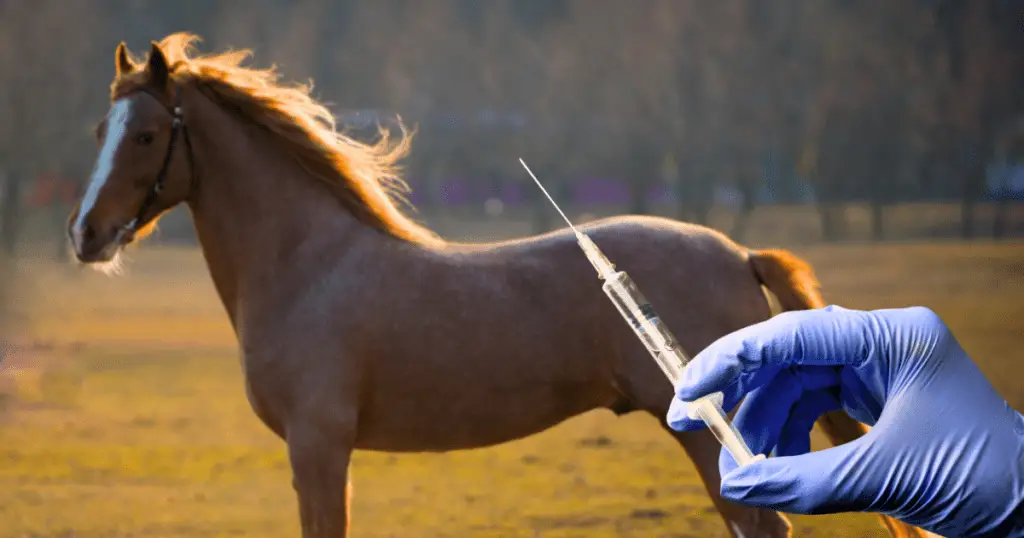
Injecting a horse intravenously (IV) can be a delicate and important procedure that should only be performed by a trained and experienced Veterinarian or horse person. However, here are 8 simple steps that can help in the process:
Horse IV Injection: How to inject a horse IV
1. Prepare the medication:
Make sure you have the medication prepared and ready to administer before approaching the horse. It’s important to ensure that the medication is the correct dosage and that it has been properly mixed, prepared and stored and there are little to no air bubbles present.
2. Choose the vein:
Identify the vein you want to inject. The most common vein in horses is the jugular vein. This vein runs along the side of the neck in a groove called the “jugular groove†just above the trachea.
3. Restrain the horse:
It is important to properly restrain the horse to avoid injury to the horse and the person administering the injection. Usually, horses are restrained with a halter and lead rope and are held by an assistant.
4. Raise the vein.
Occlude or block off the blood vessel mid-way along the neck until you see the vein raise up with blood to be able to visualise where to place the needle. Do this by placing your thumb flat across the jugular groove.
5. Insert the needle:
Insert the needle slowly into the vein at a 30-degree angle. If you feel resistance, do not force the needle. Try to reposition it slightly. Once the needle is in the vein, blood should flash into the hub of the syringe (where the needle attaches to the syringe). Make sure that the needle is securely in place, and that there is no leakage from the injection site.
6. Administer the medication:
Slowly inject the medication into the vein. The rate at which the medication is injected will depend on the specific medication and the dosage. The injection should be done slowly to minimize the risk of complications such as swelling or other reactions.
7. Remove the needle:
Once the medication has been administered, remove the needle slowly and carefully. Apply pressure to the injection site to prevent bleeding.
8. Observe the horse:
After the injection, it is important to observe the horse for any adverse reactions or complications. Signs of an adverse reaction may include swelling, difficulty breathing, or other abnormal behaviour. It is important to remember that IV injections should only be administered by a trained and experienced veterinarian or horse person. Improper injection technique or the use of contaminated equipment can lead to serious complications and even death of the horse.