Trending
John Fetterman is trending now Karen Read is trending now Florida Panthers is trending now Georgia baseball is trending now Malawi is trending now Tony Evans is trending now Rebecca Grossman is trending now iOS 18 beta is trending now Maren Morris is trending now Nvidia stock price is trending now iOS 18 beta is trending now Maren Morris is trending now John Fetterman is trending now Karen Read is trending now Florida Panthers is trending now Georgia baseball is trending now Malawi is trending now Tony Evans is trending now Rebecca Grossman is trending now iOS 18 beta is trending now Maren Morris is trending now Nvidia stock price is trending now iOS 18 beta is trending now Maren Morris is trending now
Anthropology

A Skeleton Steps Out of the Shadows

A Skeleton Steps Out of the Shadows

A newly discovered Homo habilis body reshapes our picture of early human life

728×90 ad placeholder

For more than half a century, Homo habilis has been a species we knew mostly by its head. Skulls, jaws, and teeth told us that this early human relative had a larger brain than australopiths and likely made stone tools. But below the neck, the species remained frustratingly incomplete. Limbs were scattered, fragmentary, and rarely belonged to the same individual.

That changes with a new fossil from northern Kenya.
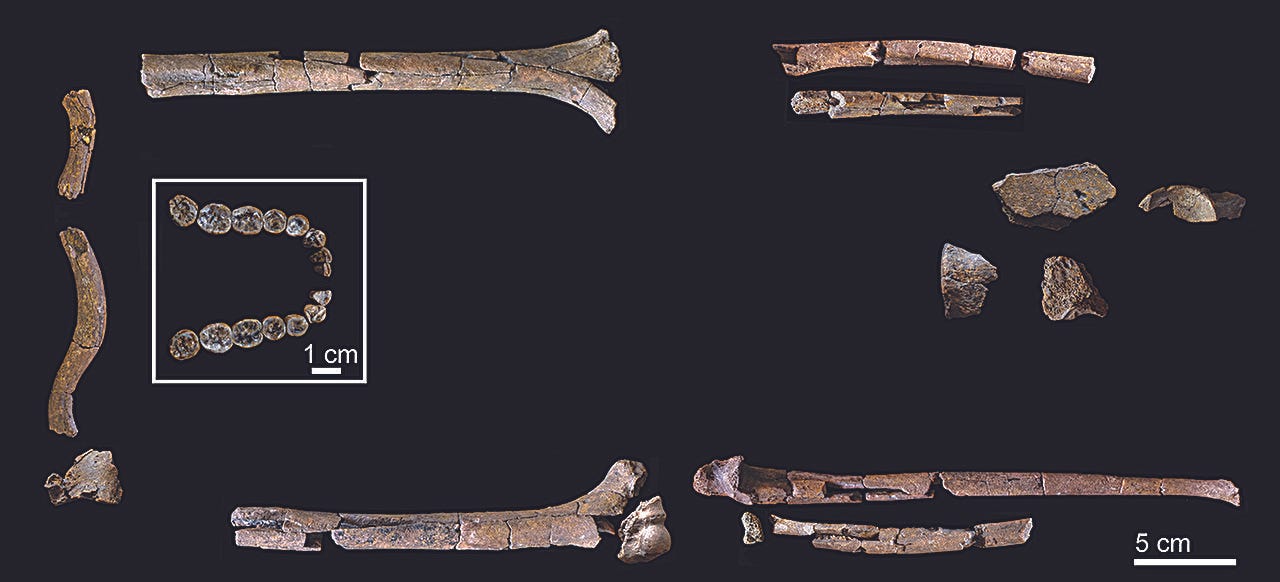
The mandibular dentition and postcranial elements that comprise KNM-ER 64060 and KNM-ER 64061, respectively. Credit: Adapted from Grine, F. E. et al., 2026

In a study published in The Anatomical Record,1 an international research team describes the most complete postcranial skeleton of Homo habilis ever discovered. Known as KNM-ER 64061, the fossil dates to just over two million years ago and finally allows researchers to see how this species moved through the world.


Read more

View original source →

Related

In-feed ad placeholder

More from Anthropology.net