
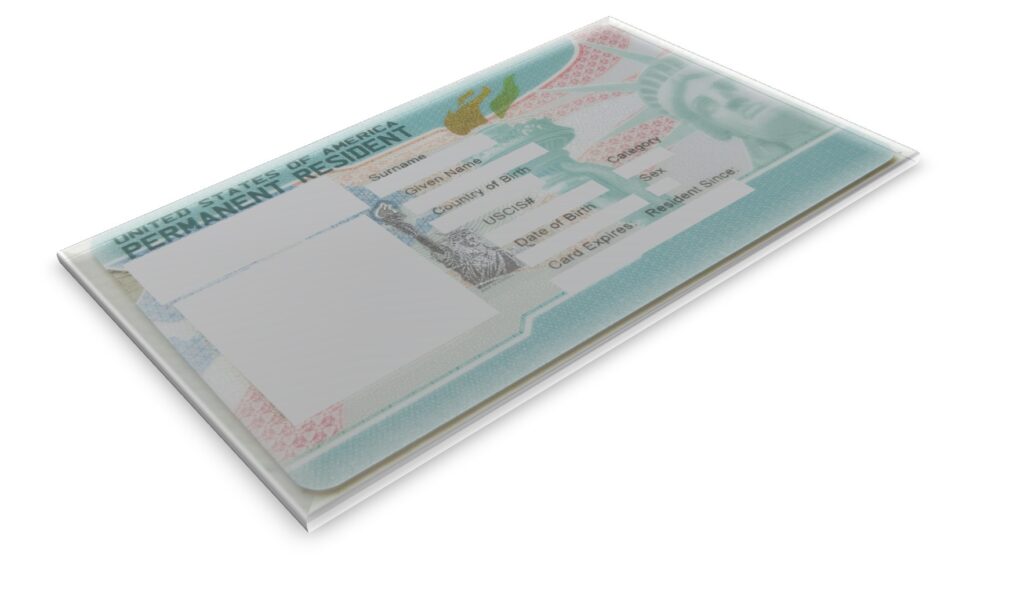
More than 14 million people in the U.S. hold a green card, yet according to the 2025 Quarter 4 Immigration and Citizenship Data, 23,818 I-140 applications were denied. If you are thinking about applying, knowing the right category, the right forms, and the right timing makes the difference between approval and years of waiting. Here's what the green card application process looks like and what you need to do to get it right.
Â
Most people don't realize how many moving parts are involved in the process. There are different green card categories, forms that must be filed in the right order, priority dates that may keep you waiting, and strict USCIS deadlines that leave no room for errors. Missing a single document or filing the wrong form can push your case back and put your permanent resident status at risk.
Â
At Hacking Immigration Law, LLC, our immigration attorneys handle every stage of your green card application so you don't have to figure it out on your own.
Â
Key takeaways:
Â
- A green card, officially called a permanent resident card, gives you the right to live and work in the U.S. on a permanent basis and is a direct path to citizenship.
- There are several ways to apply for a green card, including through family relationships, employer sponsorship, extraordinary ability, refugee or asylee status, and the Diversity Visa Lottery.
- The two main application paths are adjustment of status (if you are already in the U.S.) and consular processing (if you are outside the U.S.).
- While awaiting a green card, applicants can maintain legal employment through an Employment Authorization Document (EAD).
- Identifying the right green card category before you file is critical. The wrong category can delay or derail your entire case.
- Some applicants qualify for expedited processing, which can shorten the wait, but it is not guaranteed and depends on strict eligibility criteria.Â
Your path to becoming a permanent resident should not be left to chance. The cost of a denied or delayed green card application, in time, fees, and lost opportunities, is far too high.
Â
What Is a Green Card?
A green card is issued by the U.S. government that proves you are a lawful permanent resident of the United States. It is commonly called a green card, but its official name is the Permanent Resident Card.
Â
As a green card holder, you can:
- Live and work in the U.S. permanently
- Travel outside the U.S. and re-enter without a visa (with some restrictions)
- Sponsor certain family members for their own green card
- Apply for U.S. citizenship after a specified period (generally three to five years)
Â
While permanent resident status does not expire, the physical card requires a green card renewal every 10 years (or every two years for conditional residents). If your card was lost, stolen, or damaged, you will need to file for a green card replacement instead.
Who Can Apply for a Green Card?
There are several ways to apply for a green card. You may be eligible if you fall into one of these groups:
- A U.S. citizen or permanent resident's family member who has filed, or is ready to file, an immigrant petition on your behalf
- Employee or job offer holder in a qualifying employment-based preference category, including those with extraordinary ability who can self-petition
- Person already in the U.S. on a valid visa who wants to adjust status without leaving the country
- Person living outside the U.S. who needs to go through consular processing
- Refugee or asylee who has held that status for at least one year
- Diversity Visa Lottery winner
- Special immigrant
The right green card category depends on your specific situation. Applying under the wrong category is a common mistake that can waste time and money. If your case is based on marriage, the process has its own rules and its own risks, which we cover in detail on our marriage green card page.
Unsure which green card category applies to your case?
What Are the Types of Green Cards?
Family-Based Green Cards
This is the most common route to a permanent resident card (Green Card). It's divided into two groups:
Immediate Relatives of U.S. Citizens
These visas don't have annual limits. You don't need to wait for a priority date to become current. You can apply for this visa if you're:
- A spouse of a U.S. citizen
- Unmarried child (under 21) of a U.S. citizen
- Parent of a U.S. citizen, provided that the U.S. citizen petitioner is at least 21 years old
Family Preference Categories
This category covers more distant relatives. It has annual limits, requires a priority date, and you must wait for a visa per the visa bulletin.
It applies to:
- Siblings of U.S. citizens
- Married daughters and sons of U.S. citizens
- Adult unmarried children of U.S. citizens
- Lawful permanent residents' spouse and unmarried children
If you're applying based on marriage specifically, our marriage green card lawyer page walks through the extra scrutiny USCIS applies to these cases.
Â

Â
Employment-Based Green Cards
These green cards are based on your education, job, or skills. Most require employer sponsorship and labor certification, although some categories allow self-petitioning.
Here are the categories:
- EB-1: For people with extraordinary ability in their field, highly competent professors and researchers, and multinational executives or managers. This doesn't require a labor certification.
- EB-2: For professionals holding advanced degrees or who have exceptional ability. No labor certification required for National Interest Waiver self-petitioners.
- EB-3: For skilled workers, professionals with a bachelor's degree, and unskilled workers hired for positions that U.S. workers can't fill.
- EB-4: For special immigrants, including some religious workers, broadcasters, and Iraqi and Afghan translators, and those who worked for the American government abroad.
- EB-5: The Immigrant Investor Program is for individuals who invest significant capital in U.S. enterprises that create jobs.
Other Green Card Categories
Here are other paths to becoming a permanent resident:
- Refugee or Asylee Status: People granted this status can submit a green card application after one year.
- Diversity Visa (DV) Lottery: Commonly called the green card lottery, this category makes a limited number of immigrant visas available annually to applicants from countries with usually low immigration rates to the U.S.
- Special Immigrant Categories: This includes certain victims of crimes, abuse, trafficking, and longtime residents who qualify under humanitarian provisions.
Â
What Is the Green Card Application Process?
The application process differs depending on where you are and which green card category you are applying under. Most people go through one of two main paths: adjustment of status or consular processing.
Â
Here is a general overview of the steps involved:
- Determine eligibility and identify the right green card category
- File an immigrant petition (usually Form I-130 for family or Form I-140 for employment)
- Wait for petition approval from the Department of Homeland Security or USCIS
- Check the visa bulletin if your category has annual limits, and wait for your priority date to become current
- File your green card application (Form I-485 for adjustment of status, or a visa application through consular processing)
- Attend a biometrics appointment to register your fingerprints, photo, and signature
- Attend a green card interview at USCIS, the U.S. embassy, or consulate
- Receive a decision on your application
How Does Adjustment of Status Work?
Adjustment of status lets you apply for a green card without leaving the U.S. You file Form I-485 with U.S. Citizenship and Immigration Services (USCIS). This path is available to most people already in the country on a valid visa.
When you file for adjustment of status, file also for an employment authorization document (EAD). Once the EAD is approved, you can work legally while your green card is pending. Also apply for advance parole, which will provide you with a travel document that allows you to re-enter the U.S. if you need to travel before your green card is approved.
Â
Key forms for adjustment of status:
- Form I-485 (Application to Register Permanent Residence or Adjust Status)
- Form I-130 (Petition for Alien Relatives) if sponsored by a family member
- Form I-140 (Immigrant Petition for Alien Workers) if employment-based
- Form I-765 (Application for Employment Authorization)
- Form I-131 (Application for Travel Document / Advance Parole)
Â
The applicant must pay filing fees for each form. Costs vary depending on which forms are submitted and whether fee waivers apply.
How Does Consular Processing Work?
Consular processing is for applicants who are outside the United States. Instead of filing with USCIS, your immigrant petition is processed through the National Visa Center (NVC) and reviewed at a U.S. embassy or consulate abroad.
Â
The process generally works like this:
Â
- Your immigrant petition (I-130 or I-140) is approved by USCIS and sent to the NVC
- The NVC collects fees and documentation, then forwards your immigration case to the appropriate embassy or consulate
- You complete a visa application and submit supporting documentation
- You attend a consular interview
- If approved, you'll receive an immigrant visa stamped in your passport
- You enter the U.S. on that visa and become a lawful permanent resident
- The permanent resident card is then mailed to your U.S. address
Can You Fast-Track Your Green Card Application?
For most applicants, the green card timeline follows the standard steps above. But a small number of cases can qualify for expedited processing. Eligibility depends heavily on your category and your specific circumstances, and expedited processing is never guaranteed. The decision rests with the officer reviewing your case.
Â
Healthcare and childcare professionals. Applicants working in critical sectors like healthcare or childcare may qualify for expedited handling. USCIS typically wants proof of the role, such as employment contracts, employer letters confirming job duties, and professional licenses.
Â
Nonprofit organizations with urgent need. A nonprofit can request expedited processing when it can show an urgent need tied to a specific employee's role, for example a religious institution that needs a minister with a particular skill set. The organization has to explain why the delay would hurt its operations, not just why it wants things faster.
Â
Refugee applications. Refugees can request expedited processing based on national interest or humanitarian grounds, such as a severe medical condition. To qualify, the original application has to be filed on time and any Request for Evidence (RFE) answered fully. Wanting a faster decision on its own is not sufficient grounds, and there has to be some real urgency behind the request.
Â
What does not qualify. Expedite requests are routinely denied when the applicant is simply impatient, when there is no imminent risk tied to staying outside the U.S. longer, or when the request lacks supporting evidence.
What Affects How Long Your Application Takes
Several factors influence your timeline, whether or not you qualify for expedited processing:
Â
- Visa bulletin updates. The Department of State publishes a monthly visa bulletin. It determines when your priority date becomes current and you can move forward with your case.
- National interest. USCIS can prioritize applicants whose presence is considered important to national interests, such as healthcare workers or researchers on critical projects.
- DHS policy and workload. The Department of Homeland Security sets processing priorities that shift based on policy and caseload, which affects how quickly interviews and adjudications happen.
- Your own case history. Prior immigration violations or a criminal record can slow down your case regardless of category.
Should You Hire an Attorney to Speed Things Up?
An attorney cannot force USCIS to move faster, but the right legal help reduces the delays you create for yourself: filing the correct forms the first time, avoiding incomplete evidence, tracking your case status, and filing a well-documented expedite request when your case actually qualifies. Talk to one of our green card attorneys before you file if you think your case might qualify for expedited processing.
Tips for Preparing for Your Green Card Interview
Most applicants must attend a green card interview before their application is approved. Walking in unprepared is one of the most common reasons for delays and denials.
What to Bring to the Interview
• Gather these documents before your interview date:
• Original passport and any prior passports
• Interview appointment notice from USCIS or the embassy
• Government-issued photo ID
• Original identification documents such as your birth certificate, marriage certificate, and divorce decrees (if applicable)
• Tax returns and financial documentation
• Medical exam results (if not already submitted)
• Evidence supporting your relationship or eligibility, such as joint financial records or photos
What the Officer Will Ask
Expect questions about:
• Your background and immigration history
• Your relationship with your petitioner (for family-based cases)
• Your employment and living situation
• Your intentions in the U.S.
Why Working With an Attorney Before Your Interview Matters
Our green card attorneys will review your complete application file, walk you through likely questions, and conduct mock interview sessions so you feel confident on interview day. Preparation is the single most effective way to reduce the risk of delays or denials at this stage.
What Happens Once Your Green Card Is Approved?
Once your green card application is approved:
Â
- Your permanent resident card is mailed to the address on your application.
- You are a lawful permanent resident and may live and work in the U.S. indefinitely.
- Apply for a reentry permit if you want to travel outside the U.S. for more than one year.
- You can apply for citizenship after the required waiting period (generally three years if married to a U.S. citizen, five years otherwise).
- You must file U.S. taxes as a permanent resident.
Â
If your green card was issued on a conditional basis (common for marriage-based cases), it is valid for two years. You must file a petition to remove conditions before it expires. Our conditional green card page covers exactly what that petition requires and when to file it.
Your card itself does not last forever, either. Every permanent resident needs a green card renewal every 10 years, and the process is different from filing a fresh application.
Â

Â
Â
Other Green Card Services You May Need
Applying is only the first step. Depending on your situation, you may also need help with one of these:
- Green Card Lawyer — full-service representation for any green card category, from filing to interview
- Marriage Green Card Lawyer — for spouses of U.S. citizens or permanent residents, including cases USCIS flags for extra review
- Conditional Green Card Lawyer — for removing conditions on a two-year marriage-based green card
- Green Card Renewal — for permanent residents whose 10-year card is expiring
- Green Card Replacement — for a lost, stolen, or damaged card
Â
How Hacking Immigration Law, LLC Can Help
At Hacking Immigration Law, LLC, our attorneys handle the full green card application process from start to finish. We work with clients in every green card category, including complex cases involving prior immigration issues, prior entries, visa overstays, or periods of unlawful presence.
Here is how our process works:
Intake — You share your immigration history and goals with our Intake Team. We determine which green card category applies to your case and whether you are eligible to file today or in the future.
Onboarding — You connect with our Communications Team, which connects you with the right attorney, explains the required documentation, and keeps you updated throughout the process.
Application and Filing — Your green card attorney works with you on every form, document, and deadline. We prepare petitions, coordinate employment authorization documents, monitor the visa bulletin, and prepare you for your interview.
Post-Approval Support — We advise on next steps, including citizenship applications and green card renewal when the time comes.
Whether your case is straightforward or involves certain circumstances that require a closer look, our green card lawyers will build the right strategy before you file.
Â
Got Questions? We've Got Answers
What's a green card?
It's a card that proves you have lawful permanent resident status in the U.S. Having this card gives you the right to live and work in the country on a permanent basis.
What are the main ways to apply for a green card?
Most people apply for a green card through a family relationship, employer sponsorship, or a special immigrant category. Others apply through investment or a DV lottery. Certain circumstances, like an asylum or refugee status, can lead to a green card.
What's the difference between adjustment of status and consular processing?
Adjustment of status is for applicants living in the U.S. You file Form I-485 with USCIS without leaving the U.S. Consular processing is for applicants outside the U.S. who want to apply for an immigrant visa at the U.S. embassy or consulate and enter the U.S. as a permanent resident.
Â
Can I work with an unapproved green card application?
In most cases, yes. When you file for adjustment of status in the U.S., you can also file for an EAD. Once it's approved, the EAD lets you work legally while you wait for your green card.
How long does the green card application process take?
There is no single timeline. Processing time depends on your green card category, country of birth, USCIS processing times, and whether your priority date is current. Immediate relatives of U.S. citizens generally have the fastest process. Employment-based and family preference categories with annual limits can take significantly longer.
Can you fast-track a green card application?Â
Some applicants qualify for expedited processing, mainly healthcare and childcare workers, nonprofit organizations with an urgent, documented need, and certain refugee cases. Expedited processing is not guaranteed even when you meet the criteria. It is worth discussing with an attorney before you file if you believe your case qualifies.
What is a priority date in the green card process?
A priority date refers to the date your immigrant petition was filed. It determines your place in line when annual visa limits apply to your category. The monthly visa bulletin shows which priority dates are eligible to move forward. An attorney can help you track your date and advise when to file your green card application.
Â
The post Green Card Application: What It Is, Who Qualifies, and How to Apply appeared first on Hacking Immigration Law, LLC..


 TechToday