Study links sugar-sweetened beverages, fruit juice consumption to high blood pressure is trending nowThe Silent Pandemic Killing 3 People Every Minute is trending nowLassa fever: 237 dead as fatality rate rises to 23.7% is trending nowBlack holes older than the Big Bang could explain dark matter is trending nowSudan: Heavy Meteor Showers to Appear in the Atmosphere Tuesday Evening for Three Days is trending nowCarabao Cup second-round draw: Chelsea vs Luton, Tottenham vs Charlton, Newcastle vs West… is trending nowDonald Trump says replacing Gianni Infantino would be a ‘terrible mistake’ is trending now'Enjoy it' - Ronald Araujo reveals Luis Suarez’s advice after joining Liverpool on loan is trending nowDespite defeat to Cameroon, World Cup remains our target - Super Falcons' Christy Ucheibe is trending nowBBNaija S11: 16 housemates up for possible eviction in week three is trending nowFrom tears to thanksgiving, Actress Mo Bimpe celebrates triplets ahead of grand thanksgiv… is trending nowApply Now: Jonathan Larson Grant Program (US) is trending nowStudy links sugar-sweetened beverages, fruit juice consumption to high blood pressure is trending nowThe Silent Pandemic Killing 3 People Every Minute is trending nowLassa fever: 237 dead as fatality rate rises to 23.7% is trending nowBlack holes older than the Big Bang could explain dark matter is trending nowSudan: Heavy Meteor Showers to Appear in the Atmosphere Tuesday Evening for Three Days is trending nowCarabao Cup second-round draw: Chelsea vs Luton, Tottenham vs Charlton, Newcastle vs West… is trending nowDonald Trump says replacing Gianni Infantino would be a ‘terrible mistake’ is trending now'Enjoy it' - Ronald Araujo reveals Luis Suarez’s advice after joining Liverpool on loan is trending nowDespite defeat to Cameroon, World Cup remains our target - Super Falcons' Christy Ucheibe is trending nowBBNaija S11: 16 housemates up for possible eviction in week three is trending nowFrom tears to thanksgiving, Actress Mo Bimpe celebrates triplets ahead of grand thanksgiv… is trending nowApply Now: Jonathan Larson Grant Program (US) is trending now
Lego
WILDLIFE PONDS
Landscaping Solutions ··85 views
If you’re motivated to make a difference to biodiversity or simply wish to while away the day watching wildlife then you need a pond in your garden.
A professional garden or landscape designer will know where best to place a pond in your garden.
Here’s how to make it happen;
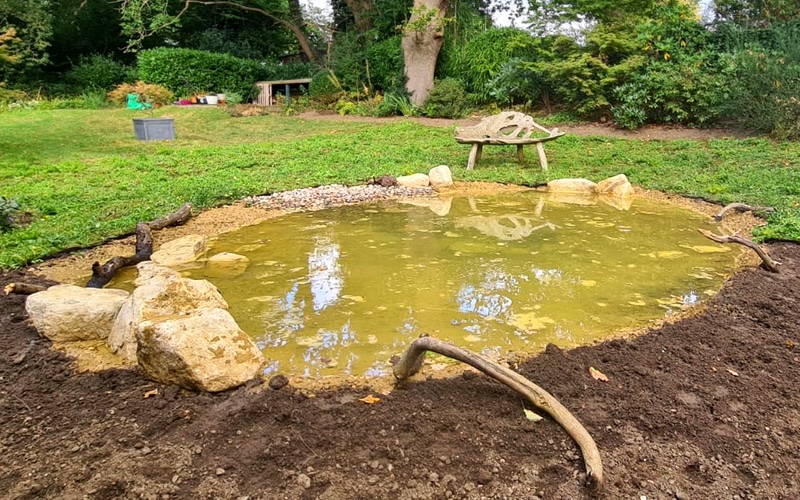
Take time to select an experienced professional to work with. A garden or landscape designer with a passion for creating naturalistic spaces will know how to attract wildlife to the garden and have an instinctive understanding of where best place to place the pond. This might be a natural dip in the lay of the land or an open area away from overhanging trees, preferably in a sunny spot as most insect and plant life thrives in warm, shallow and sunlit conditions. However, we ensure there’s at least two to three feet of depth at some point so hibernating frogs have a place to overwinter. Pond sides should gently slope to the depths to provide trouble-free wildlife access so we always create a shallow ‘beach’ area at one end.
A shallow beach area at one end of the pond provides trouble-free access for wildlife.
A clever designer will plan to save and reuse as much excavated material as possible during the build process. Fertile topsoil can be used to create borders or banks elsewhere in the garden and less fertile sub-soil can be used as growing media in the pond.
Then it’s time to get creative with the planting. Our planting schemes utilise oxygenators such as Hornwort, Water Crowfoot or Spiked Milfoil along with some floating species such as Frogbit, Fringed Water Lilly and Water Soldier. A smattering of emergent species and marginal plants such Amphibious Bistort, Brooklime, Water Avens, Purple Loosestrife, Marsh Marigold, Water Mint and Hard and Soft Rush can be planted directly in to the soil layer in and around the pond.
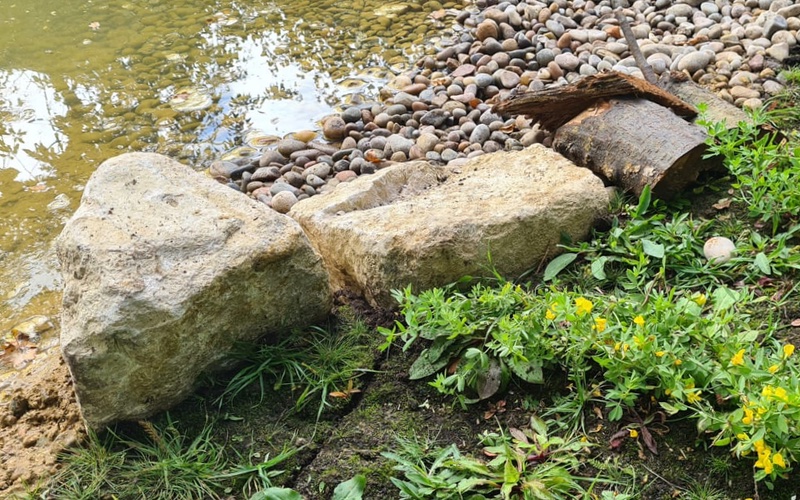
Boulders and deadwood are great for providing a hiding place for amphibians.
To make the pond more naturalistic we add boulders, stumps, deadwood, bark and branches to provide hiding places for amphibians and perches for birds and dragonflies. Now it’s time to sit back to see what comes in. It won’t be long before beetles, backswimmers, water boatmen and pond-skaters start to arrive. Snails won’t be far behind followed by frogs, toads and newts once the vegetation establishes. Within a year or so you’ll have a fully functioning ecosystem helping to redress the balance of habitat loss in the wider countryside and a constant source of enjoyment and learning.
For more information on how Landscaping Solutions can transform your garden, contact Ben West on 0208 241 2402 or email [email protected]
If you’re motivated to make a difference to biodiversity or simply wish to while away the day watching wildlife then you need a pond in your garden.
A professional garden or landscape designer will know where best to place a pond in your garden.
Here’s how to make it happen;
Take time to select an experienced professional to work with. A garden or landscape designer with a passion for creating naturalistic spaces will know how to attract wildlife to the garden and have an instinctive understanding of where best place to place the pond. This might be a natural dip in the lay of the land or an open area away from overhanging trees, preferably in a sunny spot as most insect and plant life thrives in warm, shallow and sunlit conditions. However, we ensure there’s at least two to three feet of depth at some point so hibernating frogs have a place to overwinter. Pond sides should gently slope to the depths to provide trouble-free wildlife access so we always create a shallow ‘beach’ area at one end.
A shallow beach area at one end of the pond provides trouble-free access for wildlife.
A clever designer will plan to save and reuse as much excavated material as possible during the build process. Fertile topsoil can be used to create borders or banks elsewhere in the garden and less fertile sub-soil can be used as growing media in the pond.
Then it’s time to get creative with the planting. Our planting schemes utilise oxygenators such as Hornwort, Water Crowfoot or Spiked Milfoil along with some floating species such as Frogbit, Fringed Water Lilly and Water Soldier. A smattering of emergent species and marginal plants such Amphibious Bistort, Brooklime, Water Avens, Purple Loosestrife, Marsh Marigold, Water Mint and Hard and Soft Rush can be planted directly in to the soil layer in and around the pond.
Boulders and deadwood are great for providing a hiding place for amphibians.
To make the pond more naturalistic we add boulders, stumps, deadwood, bark and branches to provide hiding places for amphibians and perches for birds and dragonflies. Now it’s time to sit back to see what comes in. It won’t be long before beetles, backswimmers, water boatmen and pond-skaters start to arrive. Snails won’t be far behind followed by frogs, toads and newts once the vegetation establishes. Within a year or so you’ll have a fully functioning ecosystem helping to redress the balance of habitat loss in the wider countryside and a constant source of enjoyment and learning.
For more information on how Landscaping Solutions can transform your garden, contact Ben West on 0208 241 2402 or email [email protected]

 Landscaping Solutions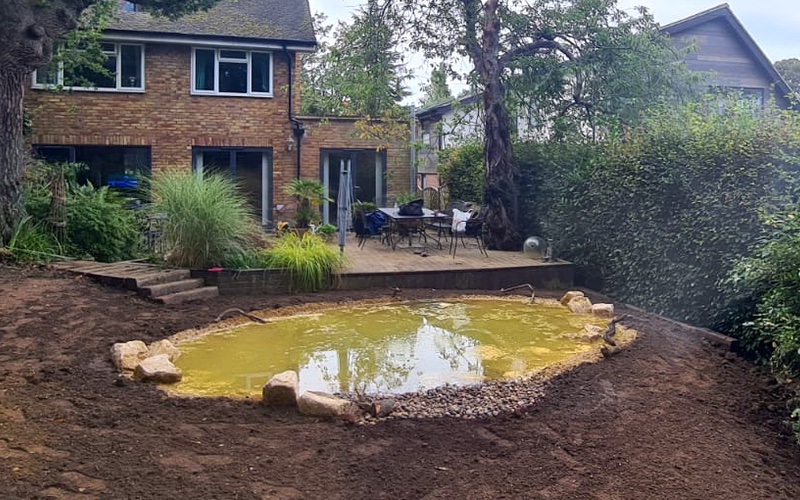

 POLLEN Blog
 Your Daily Vegan
  The Natural Photographer
 My Motorcycle Tales
  Wild.
Wild.  ViewSonic Library