
 Art Goldhammer
Amateurs of French political rhetoric should treat themselves to a sample of the Ruffin-Villepin debate. Libération and BFM-TV did well to pair two candidates who both speak well and who appear at this stage to be so far out of contention that they have nothing to lose by avoiding name-calling and admitting to areas of agreement. What ensued was a civil conversation gently moderated by a pair of well-informed but self-effacing moderators.
Villepin has of course long been known for his fluency, grace, and occasional outré figures of speech: “Je ne revêts pas mon petit tutu rose pour m’entraîner à la barre et faire le grand écart.” Ruffin, less grandiloquent and more pugnacious, has nevertheless toned down his style and steered away from the more demagogic excesses of the polemical films (such as Merci, Patron!, 2015) that first brought him to national notice. Traces of the old populist rabble-rouser remain, as when he blamed France’s troubles of the failures of “the elite” and les sots in power, offering Villepin an opportunity to point out that cleverness is no guarantee of success in the art of governing and that those without elite pedigrees may prove no more adept at achieving consensus among conflicting interests than those with them.
The two men were able to delineate their differences without impugning each other’s character or motives. Villepin opened by saying that the challenge of the moment was somehow to derail the “runaway train” of Le Pen’s National Rally, whose momentum has created the impression that it is unstoppable. Ruffin responded by evoking Baudelaire: the oppressive political climate is like the “le ciel bas et lourd [qui] pèse comme un couvercle.” Both men alluded to the spirit of unity that they would like to believe characterized the Resistance in the latter years of World War II and after–a unity that allowed left and right to work together in spite of differences in order to combat the greater menace of fascism and its aftermath. N’exagérons pas! But still, making due allowance for the gravity of the moment, the hyperbole was not out of place.
It seems that the room in which the debate took place once served as a venue for weddings, and this prompted the suggestion that perhaps a man of the left, which is what Ruffin claimed to be (without further qualification such as “ex-Mélenchoniste” or “left dissident”), might make common cause with a “left Gaullist,” which is how Villepin defined himself. ‘Twould be pleasant to think so, but the fissiparous realities of the present soon reasserted themselves: Ruffin observed that while he might be willing to sit down at the same table with Villepin, if Philippe and Attal were invited, he would quickly be compelled to absent himself.
To succeed in politics one has to be able to count, and hard-headed practitioners of the trade will no doubt be asking “How many divisions has Villepin (or Ruffin)?” The answer of course is none, to which the inevitable riposte of the “left Gaullist” would of course be that de Gaulle had none either in 1940. Quixotic quests do not regularly end in glory, however, and if de Gaulle enjoyed the “special Providence reserved for children, drunkards, and the United States of America” (as Bismarck is supposed to have said in regard to another inexplicable political miracle), neither Villepin nor Ruffin nor some improbable tandem of the two is likely to be so blessed by Fate. Still, it was pleasant to be able to watch a political debate without being reduced to indignant sputtering and without having to endure endless statistical recitatives or ad hominem attacks.
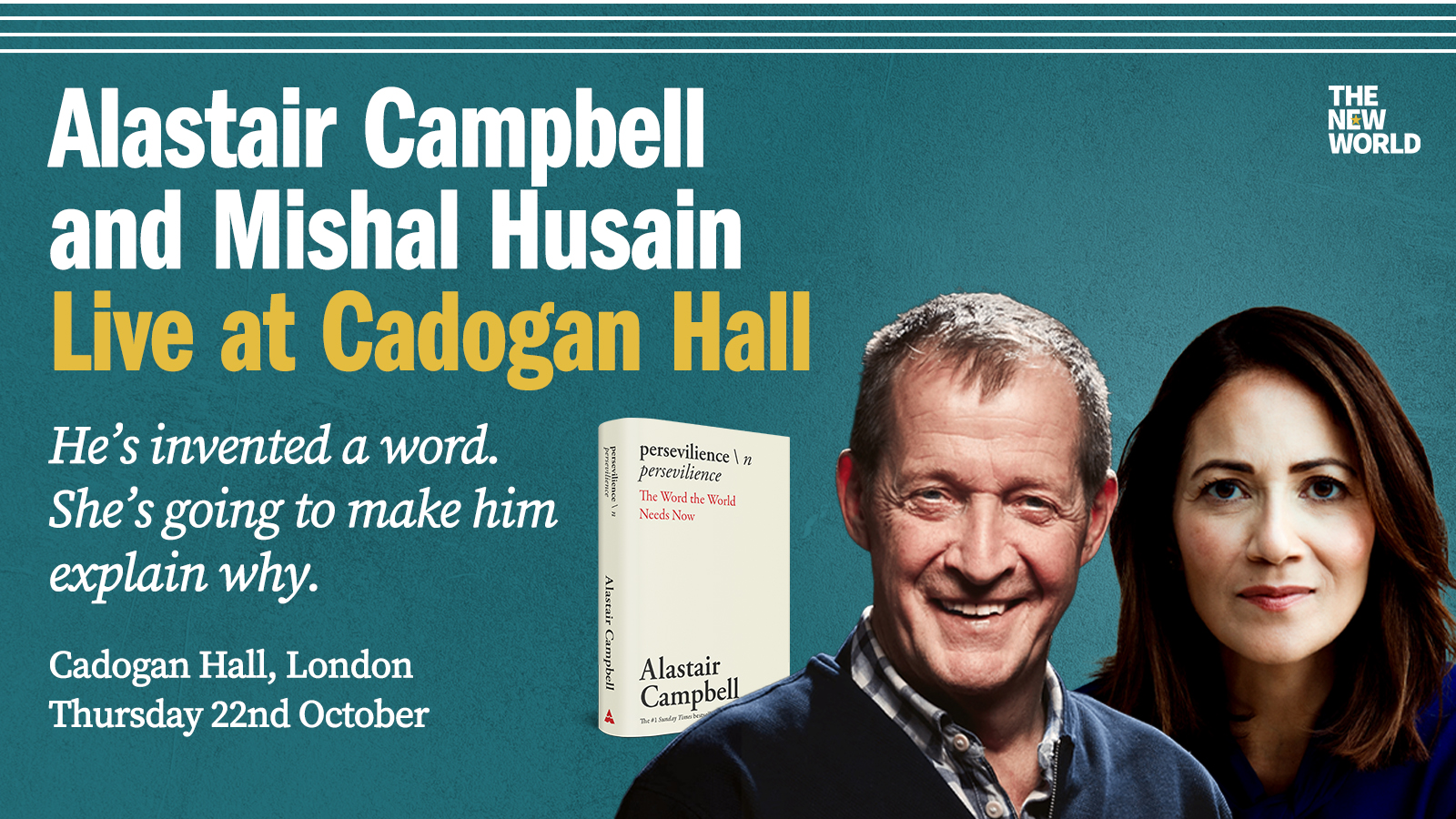
 Alastair Campbell
  Learn Something Interesting
  IndieWire
  Editorialge
  Dangerously Irrelevant By Scott McLeod
  The Register