
 Grit Daily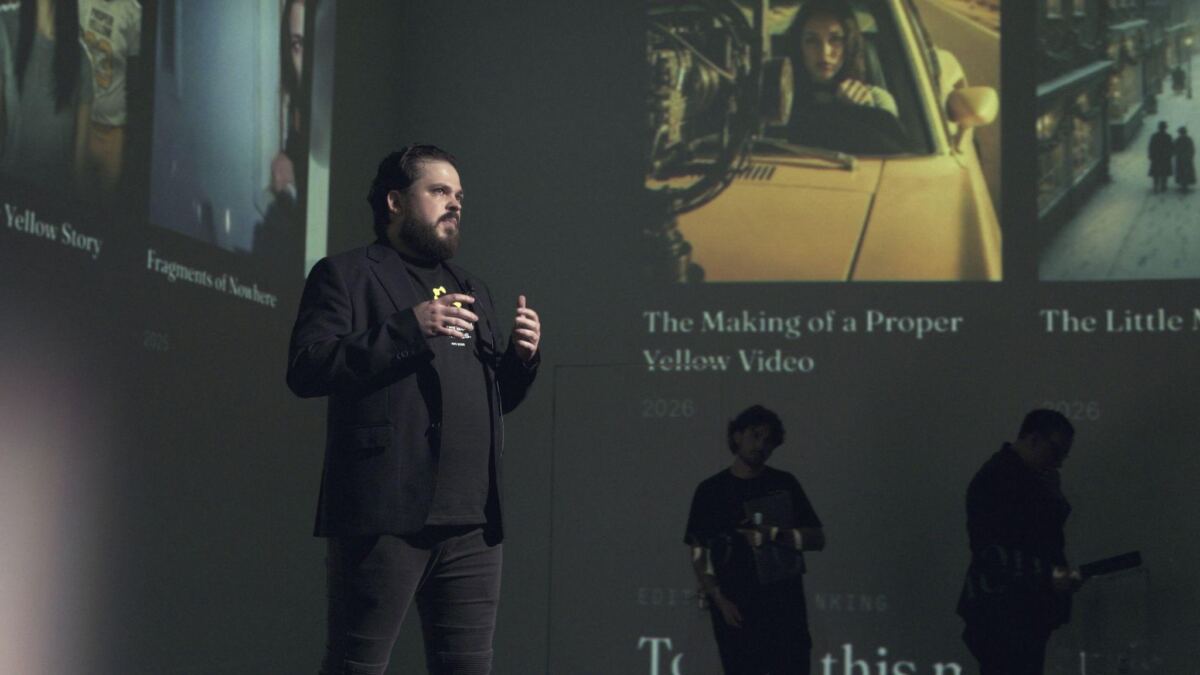
Most people can name a favorite director or musician, and they can probably name an actor whose performance stayed with them. But ask them to name an AI video creator whose work they have watched online, and the answer becomes considerably harder.
AI-generated commercials circulate widely, synthetic characters are beginning to develop recognizable identities, and filmmakers are experimenting with productions that would have required much larger budgets only a few years ago. Yet much of the human talent behind those projects remains surprisingly difficult to find.
Artur Balabanskyy has spent enough of his career behind the scenes to recognize the problem.
Before becoming co-founder of Generated Group, Balabanskyy built software for other companies. He taught himself programming after initially studying international economics and law in his native Ukraine, eventually co-founding software development firm TapForce in 2017. Its engineers built products that appeared under other companies’ names, including maternal wellness platform Expectful, which was later acquired by Babylist.
Being invisible was part of the job. The better the technology worked, the less reason anyone had to wonder who built it. That experience has taken on new relevance as Balabanskyy watches generative AI reshape creative production.
The People Behind the Prompt
Balabanskyy was running TapForce’s engineering operation from Lviv when Russia’s full-scale invasion of Ukraine began in 2022. He remained there for two years as members of his team gradually relocated, keeping the company operating without client-facing disruption before eventually moving to the United States with his family in 2024.
By then, AI was changing the work on both sides of his career. Software developers were using it to write code faster, while creative teams were discovering that small groups could produce video work that previously demanded far more money and manpower.
The technology could make more people creators, but it could also make those creators easier to overlook.
That contradiction helped lead Balabanskyy and his partners toward Generated Group, which began building infrastructure around AI-generated creative work. Its first Generated Awards, held in New York in May, recognized AI-generated commercial advertising. The group has now launched GeneratedDB, a searchable platform intended to give creators and their finished projects a more permanent home.
Giving AI Work a Memory
Social media is very good at showing people what is interesting right now. It is considerably worse at preserving who made something after the feed moves on.
“Today, AI video exists everywhere and nowhere at the same time,” Balabanskyy said. “The work lives across dozens of platforms, making it difficult to find, reference, or build upon.”
GeneratedDB is designed to collect finished AI video projects and connect them to creator profiles. Rather than treating the use of AI as the most important fact about a piece of work, the platform puts more emphasis on who made it and what else that person has created.
Balabanskyy is careful not to turn that argument into a blanket defense of generative media. Questions about copyright remain unsettled, workers have legitimate concerns about what automation means for their careers, and an internet flooded with cheaply generated content does little to help serious creators establish themselves. His argument is narrower. If people are using these tools to produce original work, an industry developing around that work needs a way to remember who contributed to it.
Making the Invisible Visible
There is something fitting about that mission coming from someone who spent years building technology other people received credit for.
Balabanskyy has described his instinct throughout his career as building infrastructure that other people can stand on. With TapForce, that meant engineering products for clients. GeneratedDB applies the same instinct to a creative field that barely existed in recognizable form a few years ago.
“We’re building the industry’s institutional memory,” he said. Years from now, he wants people to be able to trace the creators behind the first generation of AI-native films and characters instead of finding only broken links and forgotten social posts.
Whether today’s AI creators eventually become household names is harder to predict. New creative mediums have a habit of producing their own stars, even when audiences initially pay more attention to the technology than the people using it.
Balabanskyy is making a simpler bet: if AI video is becoming an industry, the people building it should not have to remain invisible.
The post AI Video Has a Credits Problem, Artur Balabanskyy Wants to Fix It appeared first on Grit Daily News.
 Deadspin
  Niche Golf
 Politics.co.uk
 Washington Monthly Magazine
  EdTechReview
 The Right Scoop